

 (416) 656-1170
Pediatric Dentistry Near You
There is something that every parent knows but rarely talks about openly: getting a child to the dentist is not always easy. For some kids it is pure curiosity — they want to see all the tools. For others, even the word “dentist” is enough to trigger a full negotiation. And for parents, there is often a quiet layer of worry underneath it all — am I doing this at the right age? Are their teeth developing normally? Will this experience set the tone for how they feel about dental care for the rest of their lives?
These are not small questions. And they deserve real answers, not just reassurances.
At Keele Crosstown Dental, we work with children of all ages — from the moment that first tiny tooth appears through the full transition into adult dentistry. This page is written specifically for parents: what to expect at each stage, how to know if something needs attention, and how we approach children’s dental visits so that the experience actually builds confidence rather than anxiety.
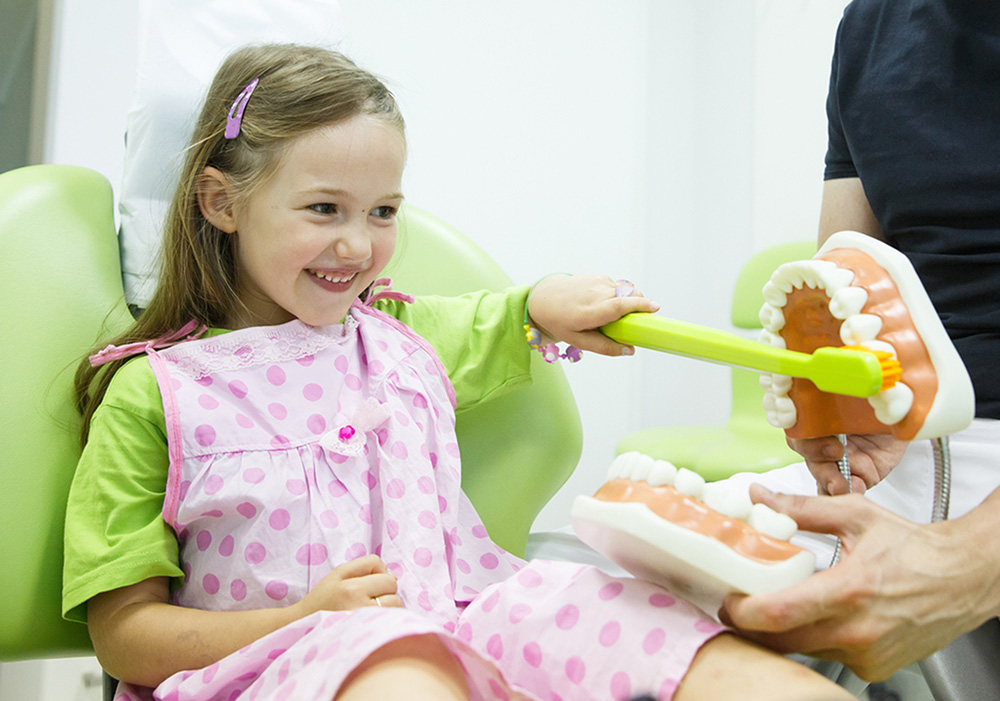
Why Children’s Dental Care Is a Category of Its Own
Children are not just small adults with smaller teeth. Their mouths are constantly changing — teeth erupting, shifting, falling out, and growing back in. Their jaw bones are still developing. Their enamel, while structurally similar to adult enamel, is thinner and more vulnerable to decay. And their ability to communicate discomfort is still developing right alongside everything else.
This is why the approach matters as much as the clinical work. A pediatric dentist in York who understands child development — not just dental anatomy — can make an enormous difference in how a child experiences dental care and whether they carry a negative association into adulthood.
Dental anxiety in adults is overwhelmingly traced back to childhood experiences. Getting this right from the beginning is not just about protecting baby teeth. It is about shaping how your child relates to their health for decades.
Getting here is simple — just follow us on Google Maps for the best route.
Age-by-Age Guide: What to Expect at Every Stage
Infants and Toddlers (0 to 2 Years)
This is the stage that most parents skip — and understandably so. If there are barely any teeth yet, why go to the dentist?
The Canadian Dental Association recommends a child’s first dental visit within six months of their first tooth appearing, or by their first birthday — whichever comes first. That first visit is not about drilling or deep cleaning. It is brief, gentle, and mostly educational. We check that the jaw and gums are developing normally, look at how the first teeth are coming in, and talk with parents about feeding habits, pacifier use, and how to clean those early teeth properly.
It also starts something important: familiarity. A child who has visited the dental clinic before any problem exists has a very different starting point than one who only shows up when something hurts.
Common concerns at this stage:
- Teething discomfort and timing
- Whether thumb-sucking or pacifier use will affect tooth development
- How to clean gums and early teeth safely
- Baby bottle tooth decay (a real and preventable issue)
Young Children (3 to 6 Years)
By age three, most children have a full set of 20 primary teeth. These are often called “baby teeth,” and because they eventually fall out, parents sometimes wonder if they really matter. They do — significantly.
Primary teeth hold space in the jaw for permanent teeth to grow into the correct position. They allow children to chew, speak, and develop properly. Tooth decay in baby teeth can spread, cause pain, and affect the permanent teeth developing underneath. Treating decay early is far simpler, faster, and less stressful than managing a problem that has been left to progress.
At this stage, we also start introducing preventive tools: fluoride treatments to strengthen enamel, dental sealants for the back teeth, and clear guidance for parents on diet, brushing technique, and what to watch for between visits.
If you are searching for a pediatric dentist near you for a child in this age range, routine visits twice a year are the standard recommendation — and for good reason.
Common concerns at this stage:
- Cavities in primary teeth
- Thumb sucking and its effect on bite development
- Whether teeth are erupting in the right order
- Preparing children for longer or more involved visits
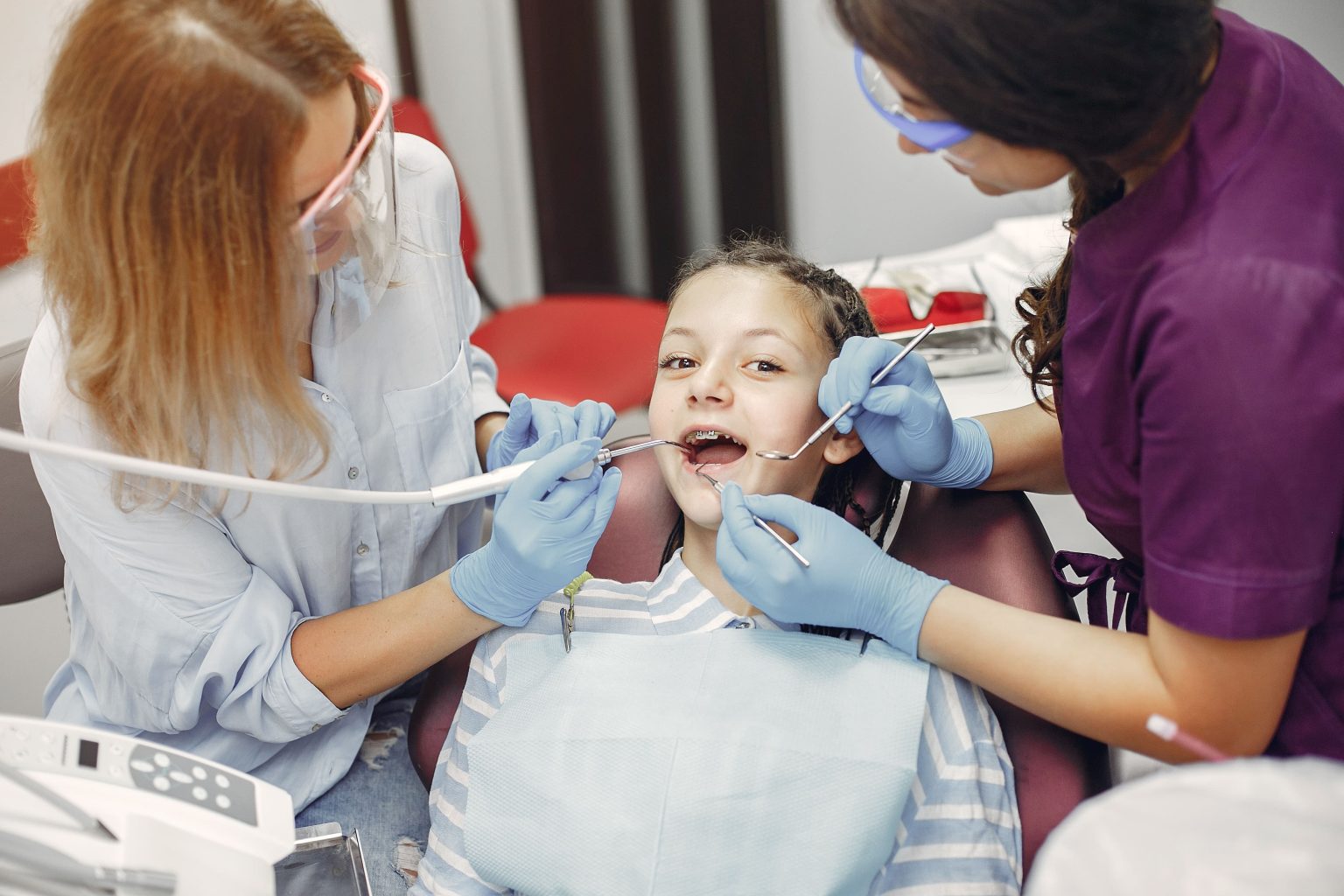
School-Age Children (7 to 12 Years)
This is the mixed dentition phase — a period where baby teeth and permanent teeth coexist, and where the mouth goes through some of its most dramatic changes. The first permanent molars typically arrive around age six or seven, and they are critically important teeth that will need to last a lifetime. Many parents do not realize they have arrived because they grow in behind the existing teeth rather than replacing them.
This is also the stage where orthodontic evaluation becomes relevant. Around age seven, there is enough permanent tooth structure visible to identify whether crowding, bite issues, or spacing problems are developing. Early intervention — when the jaw is still growing — can be far less involved than waiting until all the permanent teeth are in.
Regular visits with a pediatric dentist near you during this phase allow us to monitor the transition closely and flag anything that warrants attention before it becomes a bigger issue.
Common concerns at this stage:
- Loose teeth and the arrival of permanent teeth
- Protecting first permanent molars with sealants
- Whether braces or early orthodontic work will be needed
- Sports injuries and the importance of mouth guards
- Developing independent brushing and flossing habits
Teenagers (13 to 17 Years)
Teenagers present a different kind of challenge in dental care. By this point, all or most of the permanent teeth are in — and the habits formed now will determine the condition of those teeth at 30, 40, and beyond. This is also the age where wisdom teeth begin to develop and where orthodontic treatment is often in full swing.
Peer awareness increases significantly in the teen years, which means aesthetic concerns become part of the conversation — the appearance of teeth, the straightness of a smile, whitening. We approach these conversations honestly: what is appropriate at this age, what can wait, and what is most important to prioritize.
A dentist in York who takes teenage patients seriously — listens to their concerns, explains what is happening clearly, and does not talk over their head — builds the kind of relationship that keeps them coming back as young adults.
Common concerns at this stage:
- Wisdom teeth monitoring and timing of removal
- Orthodontic progress and retention after braces
- Cavity risk from diet and inconsistent brushing
- Safe whitening options
- Sports protection
What Makes a Children’s Dental Visit Go Well
Parents often ask us what they can do to help before an appointment. A few things genuinely make a difference:
Talk about it ahead of time, but keep it simple. You do not need to over-explain or over-prepare. Telling a child “we are going to the dentist to make sure your teeth are healthy” is usually enough. Avoid language like “it won’t hurt” — that introduces the idea of pain before it is relevant.
Come in relaxed if you can. Children are perceptive. If a parent is visibly tense in the waiting room, a child notices. Your calm is contagious in the best possible way.
Do not use the dentist as a threat. Phrases like “if you do not brush, the dentist will have to drill your teeth” create exactly the association you want to avoid. We want children to see dental visits as normal and positive, not as consequences.
Let us do our job. Our team is experienced in working with children who are nervous, curious, reluctant, or energetic. You do not need to manage your child’s behaviour on our behalf. Just being present and steady is enough.
Bringing It All Together
Finding a pediatric dentist in York who genuinely works well with children — who is patient, communicative, and skilled at both the clinical and human sides of dental care — is one of the better investments you can make in your child’s long-term health.
At Keele Crosstown Dental, we have built our approach around exactly that. We know that a great first experience at the dentist can set a child up for a lifetime of good oral health. We also know that a difficult one can do the opposite.
If you are looking for a pediatric dentist near you for your child — whether it is their very first visit or you are looking for a new dental home — we would be glad to welcome your family. Our team is here to make this easy for both of you.
FAQs
Conveniently Located Dental Clinic Serving York & Surrounding Areas
Our dental clinic is conveniently located on Eglinton Avenue West in York, Toronto, offering easy access via public transit and free parking for all our patients. This central location makes it easy for those seeking a dental clinic nearby to receive high-quality care without the hassle of long travel.
We proudly serve patients from York and surrounding neighbourhoods, providing accessible, dependable, and personalized dental care close to home.
