

 (416) 656-1170
Tooth Extractions Near You
Nobody walks into a dental clinic hoping to lose a tooth. We get that. But when a tooth is causing real damage — pain that won’t quit, an infection spreading, a wisdom tooth wedged at the wrong angle — keeping it often causes more harm than removing it. At Keele Crosstown Dental, we approach every Tooth Extraction in York with care, precision, and a lot of compassion. Our goal is always to make the experience as smooth and comfortable as possible, whether it’s a straightforward simple extraction or a more involved surgical removal.
This page covers everything you need to know: when extraction is the right call, the difference between simple and surgical procedures, what to expect before and after, wisdom teeth, cost in the Toronto area, and how we look after you through the whole process.
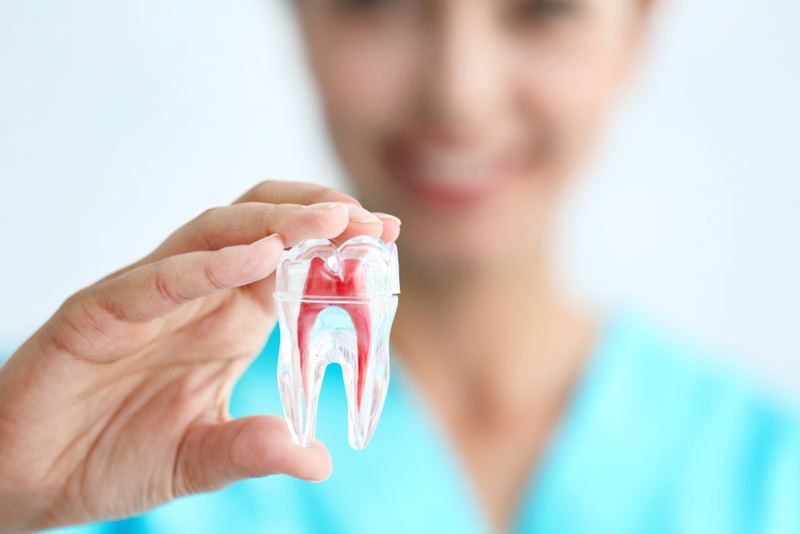
When Does a Tooth Actually Need to Come Out?
A good dentist in York will never suggest pulling a tooth unless it’s genuinely the best option for your long-term health. We always look for ways to save a tooth first — fillings, root canals, crowns. But sometimes a tooth simply can’t be rescued. Here are the most common reasons our patients come to us needing an extraction:
- Severe decay that has destroyed too much of the tooth structure for a filling or crown to hold
- A dental abscess or infection that has spread to the root or surrounding bone, especially when root canal treatment is not viable
- A cracked or fractured tooth where the break extends below the gum line
- Impacted wisdom teeth that are causing pain, pressure, crowding, or recurring infections
- Preparation for orthodontic treatment — sometimes a tooth needs to go to create the right amount of space
- Advanced gum disease (periodontitis) that has compromised the bone holding the tooth in place
- A baby tooth that hasn’t fallen out on its own and is blocking an adult tooth from coming in correctly
If you are searching for Tooth Extractions near you and aren’t sure whether you actually need one, book a consultation with us first. We will take X-rays, look at the full picture, and give you our honest recommendation. If there is a way to save your tooth, we will tell you.
Simple vs. Surgical Extraction — What’s the Difference?
One of the most common questions patients ask us is whether their extraction is going to be “the simple kind” or “the surgery kind.” Here’s a clear, no-jargon explanation of both, so you know exactly what you’re walking into.
Simple Extraction
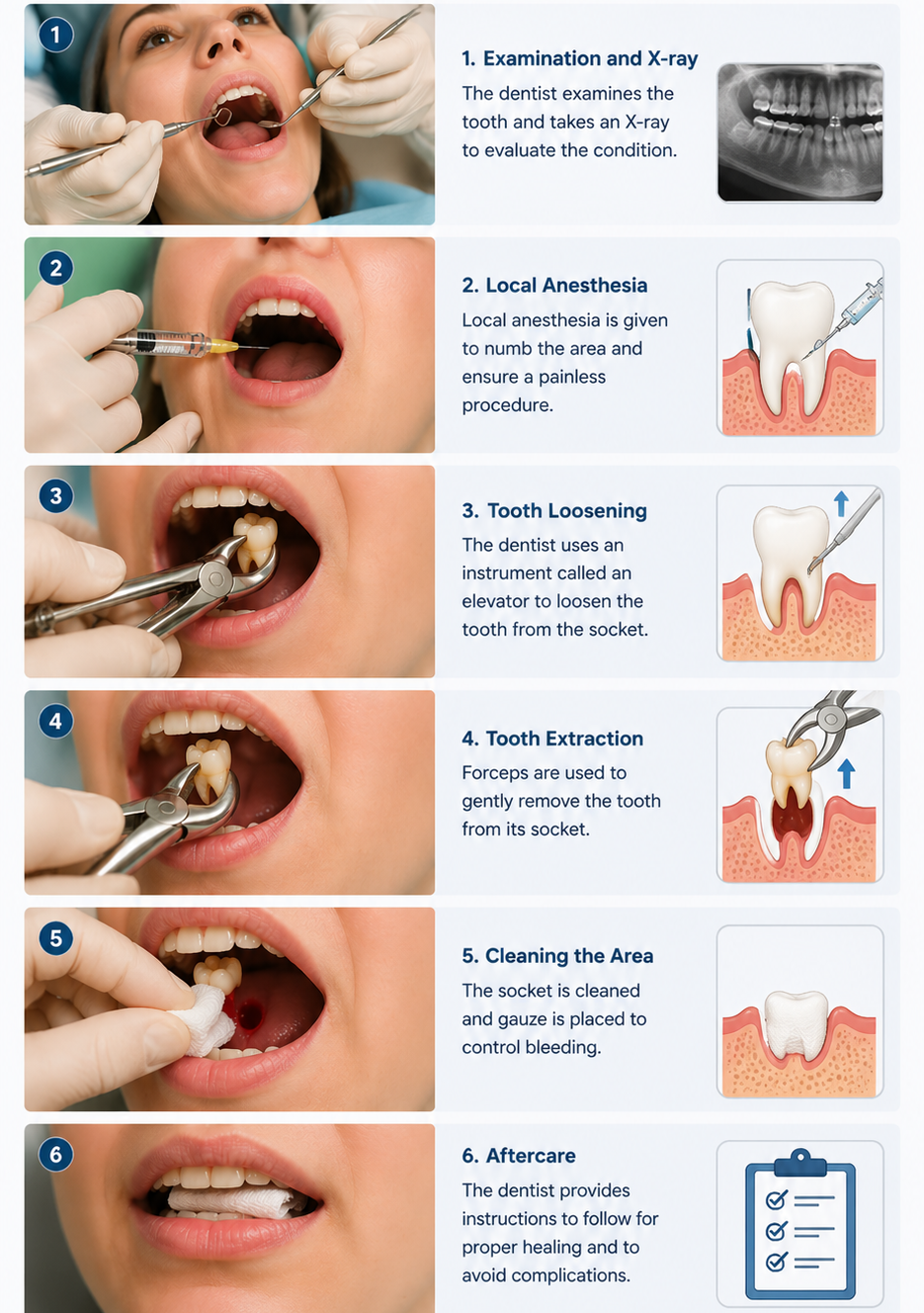
A simple extraction is done when the tooth is fully visible above the gum line and there are no major complications. The dentist uses a tool called an elevator to gently loosen the tooth from the surrounding ligament, then lifts it free with forceps. You’ll be numb the whole time — you’ll feel pressure and movement, but not pain. Most simple extractions are done in 15 to 30 minutes. Healing is usually quick, and most patients are back to their normal routine within a couple of days.
Surgical Extraction
A surgical extraction is needed when the tooth is harder to access — for example, if it has broken off at the gum line, hasn’t fully erupted, or is impacted beneath the bone. The dentist makes a small incision in the gum tissue to access the tooth. In some cases, a small amount of bone is removed, or the tooth is cut into sections to make it easier to remove safely. Stitches are often placed afterwards, usually the type that dissolve on their own. Sedation options are available if you feel anxious.
Simple vs. Surgical — At a Glance
| Aspect | Simple Extraction | Surgical Extraction |
|---|---|---|
| Tooth Position | Fully visible above gum line | Impacted, broken, or below gum line |
| Procedure | Loosened with elevator, removed with forceps | Incision in gum; may need bone removal or sectioning |
| Anaesthesia | Local anaesthetic only | Local anaesthetic; sedation optional |
| Appointment Time | 15–30 minutes | 30–90 minutes depending on complexity |
| Recovery Time | 1–3 days for most patients | 3–7 days; longer for impacted cases |
| Stitches Required | Rarely | Often yes, usually dissolving |
| Typical Cost (Toronto) | $150–$300 per tooth | $300–$600+ per tooth |
| Performed By | General dentist | General dentist or oral surgeon |
Wisdom Teeth — Why They Cause So Many Problems
Wisdom teeth are your third molars — the last teeth to come in, usually between the ages of 17 and 25. Some people never have issues with them. Others aren’t so lucky. The human jaw has evolved to be smaller over thousands of years, and many of us simply don’t have enough room for these extra teeth. When there isn’t enough space, wisdom teeth can become impacted — meaning they get stuck and can’t come through properly.
If you’ve been experiencing dull aching pain at the back of your jaw, pressure, or swelling around your back teeth, it could well be your wisdom teeth. Left too long, impacted wisdom teeth can cause infections, damage to the neighbouring molars, cysts, and ongoing discomfort. If you’re looking for Tooth Extractions near you specifically for wisdom teeth, you’re in good hands at Keele Crosstown Dental.
Types of Wisdom Tooth Impaction
Not all impacted wisdom teeth are the same. The type of impaction determines how complex the removal will be:
| Type of Impaction | What It Means | Extraction Complexity |
|---|---|---|
| Fully Erupted | Wisdom tooth broke through gum fully | Similar to a regular extraction — lower complexity |
| Soft Tissue Impaction | Crown through bone but gum covers it | Minor incision in gum tissue required |
| Partial Bony Impaction | Tooth partially stuck in jawbone | Bone removal needed; moderate surgical complexity |
| Full Bony Impaction | Tooth completely enclosed in jawbone | Most complex; oral surgeon often recommended |
| Angular Impaction | Tooth angled toward next molar | Risk of root damage to adjacent tooth; surgical approach |
Before recommending treatment, we take a panoramic X-ray (a wide image of your entire jaw) so we can see exactly how each wisdom tooth is positioned, where the roots sit, and how close they are to important structures like the inferior alveolar nerve. This allows us to plan the extraction precisely and avoid surprises.
Do all wisdom teeth need to come out? Not always. If your wisdom teeth have fully erupted, are properly aligned, and you can clean them effectively, there may be no reason to remove them. We’ll let you know honestly after your examination.
What to Expect — Before, During, and After Your Extraction
A lot of the anxiety around tooth extractions comes from not knowing what’s going to happen. So here is a straightforward walkthrough of the entire process at Keele Crosstown Dental.
Before the Procedure Dental exam and X-rays to assess the tooth. We discuss your options, explain what to expect, and answer every question you have. Your medical history is reviewed to confirm anaesthetic suitability.
During — Simple Extraction Local anaesthetic freezes the area. The dentist uses a small tool to loosen the tooth, then gently removes it with forceps. Most patients feel pressure but no pain. Done in 15–30 minutes.
During — Surgical Extraction Local anaesthetic is applied, with sedation available if preferred. A small incision is made in the gum; bone or tooth may be sectioned for safe removal. The area is cleaned and stitched. Takes 30–90 minutes.
First 24 Hours Bite on gauze for 30–45 minutes to control bleeding. Rest at home. Take prescribed or over-the-counter pain relief as needed. No smoking, no straws, no spitting forcefully.
Days 2–3 Swelling and bruising may peak. Apply ice packs in 20-minute intervals. Soft foods only — soups, yogurt, mashed potatoes, scrambled eggs. Rinse gently with warm salt water.
Days 4–7 Discomfort should ease noticeably. Gradually reintroduce normal foods as comfortable. Surgical patients: stitches typically dissolve within 7–10 days.
1–2 Weeks Most patients are fully recovered. A follow-up appointment for surgical cases confirms healing. Contact us immediately if you experience dry socket symptoms — sharp, throbbing pain after day 3.
One important thing to flag: dry socket affects roughly 2–5% of patients. It happens when the blood clot that forms in the empty socket is dislodged or dissolves too early, leaving the underlying bone exposed. It is more painful than the extraction itself and usually kicks in around day 3 or 4. If that happens, call us right away — it is very treatable, and we will get you sorted quickly.
Aftercare — How to Heal Faster and Avoid Complications
Healing well after a tooth extraction really comes down to what you do in the first 48 to 72 hours.
Do This:
- Bite gently on gauze for 30–45 minutes after the procedure
- Take pain relief as directed by your dentist
- Apply ice packs (20 minutes on, 20 minutes off) for the first 24 hours
- Eat soft foods — soup, yogurt, eggs, mashed potatoes
- Rinse gently with warm salt water after 24 hours
- Keep your head slightly elevated when sleeping
- Brush gently around the area after the first day
- Call us if you experience worsening pain after day 3
Avoid This:
- Spitting forcefully or rinsing vigorously for 24 hours
- Using a straw — the suction can dislodge the blood clot
- Smoking or using tobacco products during healing
- Eating hard, crunchy, or hot foods too soon
- Poking the socket with your tongue or fingers
- Drinking alcohol while taking prescribed medications
- Missing your follow-up appointment if one is booked
- Ignoring signs of dry socket — sharp, persistent pain
Most people are surprised by how manageable the recovery actually is when they follow the aftercare instructions properly. If at any point something doesn’t feel right — the pain is getting worse rather than better, you’re running a fever, or you notice unusual discharge from the site — call us.
Tooth Extraction Cost in Toronto — What You Can Realistically Expect to Pay
The cost of a tooth extraction in Toronto depends on a few key factors — the type of procedure, the complexity of your situation, and whether sedation or additional imaging is required. We follow the Ontario Dental Association (ODA) Suggested Fee Guide as our pricing benchmark, keeping our fees consistent with standard rates across the GTA.
What Affects the Cost?
Not all extractions are the same. A simple extraction for a fully erupted tooth is a straightforward procedure, while a surgical extraction or an impacted wisdom tooth removal involves more time, skill, and resources. Additional considerations such as a panoramic X-ray or sedation options like nitrous oxide may also factor into the overall cost. Your dentist will walk you through exactly what is involved before any treatment begins so there are no surprises.
Will My Insurance Cover It?
In most cases, yes. Tooth extractions are classified as a basic service under the majority of Canadian dental insurance plans, meaning a significant portion of the cost is typically covered — including wisdom tooth removals when they are clinically necessary. Our team is happy to help you verify your coverage and handle the claims process on your behalf.
What If I Don’t Have Insurance?
No insurance? That should not stand between you and the care you need. Ask our team about flexible payment arrangements that can help make treatment more manageable over time.
What About OHIP?
OHIP does not cover routine dental extractions. The only exception is when a procedure is performed in a hospital setting due to a medically complex situation. If you have questions about your eligibility or options, we are always happy to help point you in the right direction.
Why Patients Choose Keele Crosstown Dental for Tooth Extractions Near You
There are a lot of dental clinics in the Toronto area. Here’s what our patients consistently tell us makes the difference when they’re looking for Tooth Extractions near you:
- We take time at every appointment. No rushed consultations, no assembly-line dentistry.
- We always explore alternatives to extraction first and only recommend removal when it is genuinely the right call for your long-term health.
- Digital X-rays and panoramic imaging on-site mean we can plan every extraction with precision before we start.
- We offer sedation options for patients who feel anxious, including nitrous oxide (laughing gas).
- Clear, upfront pricing — you will always know what you’re paying before treatment begins.
- Friendly aftercare support — if you have questions or concerns during your recovery, we are available to help.
Book Your Tooth Extraction Consultation at Keele Crosstown Dental
Tooth pain or dental concerns don’t get better on their own. If you’ve been putting off getting a problem tooth looked at, now is the right time to take action — the earlier we catch an issue, the more options you have.
Whether you need a routine Tooth Extraction in York, are dealing with a painful wisdom tooth, or just want an honest second opinion on whether a tooth really needs to come out, our team at Keele Crosstown Dental is here to help. We serve patients across York, Toronto, and the surrounding areas, and we are always welcoming new patients.
Call us or book online today — same-week appointments available for urgent dental concerns.
FAQs
Conveniently Located Dental Clinic Serving York & Surrounding Areas
Our dental clinic is conveniently located on Eglinton Avenue West in York, Toronto, offering easy access via public transit and free parking for all our patients. This central location makes it easy for those seeking a dental clinic nearby to receive high-quality care without the hassle of long travel.
We proudly serve patients from York and surrounding neighbourhoods, providing accessible, dependable, and personalized dental care close to home.
